STRUCTON
IT systems · integrate – migrate – build
Your systems. Connected at last.
Your programs don't talk to each other. We connect what is already there.
Your system landscape
From intake to reporting.
A document arrives, flows through the systems and is available everywhere – captured once.
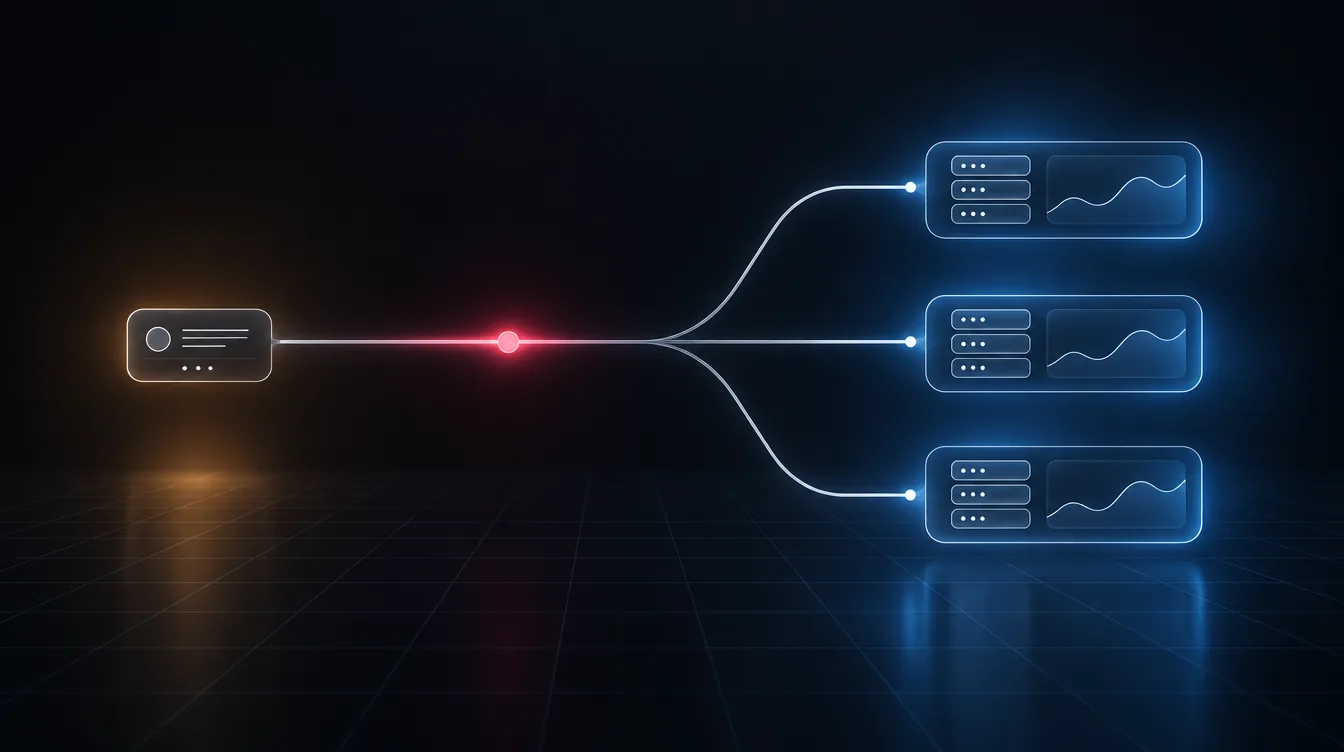
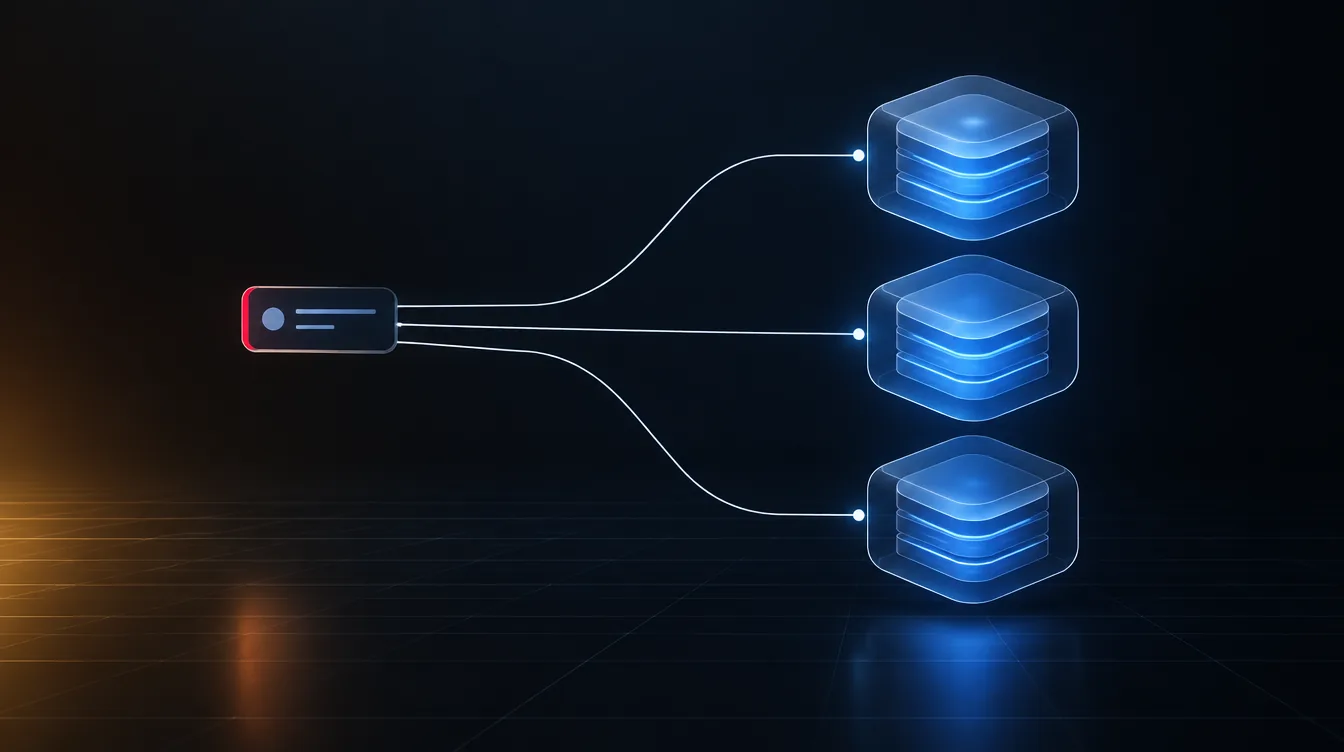
- Stage 1 · IntakeA document, an enquiry, an order arrives – captured once.
- Stage 2 · DistributionInterfaces carry the transaction into CRM, ERP and accounting.
- Stage 3 · ReportingAll systems lit up: the same status everywhere, figures without retyping.
The right path instead of starting from scratch.
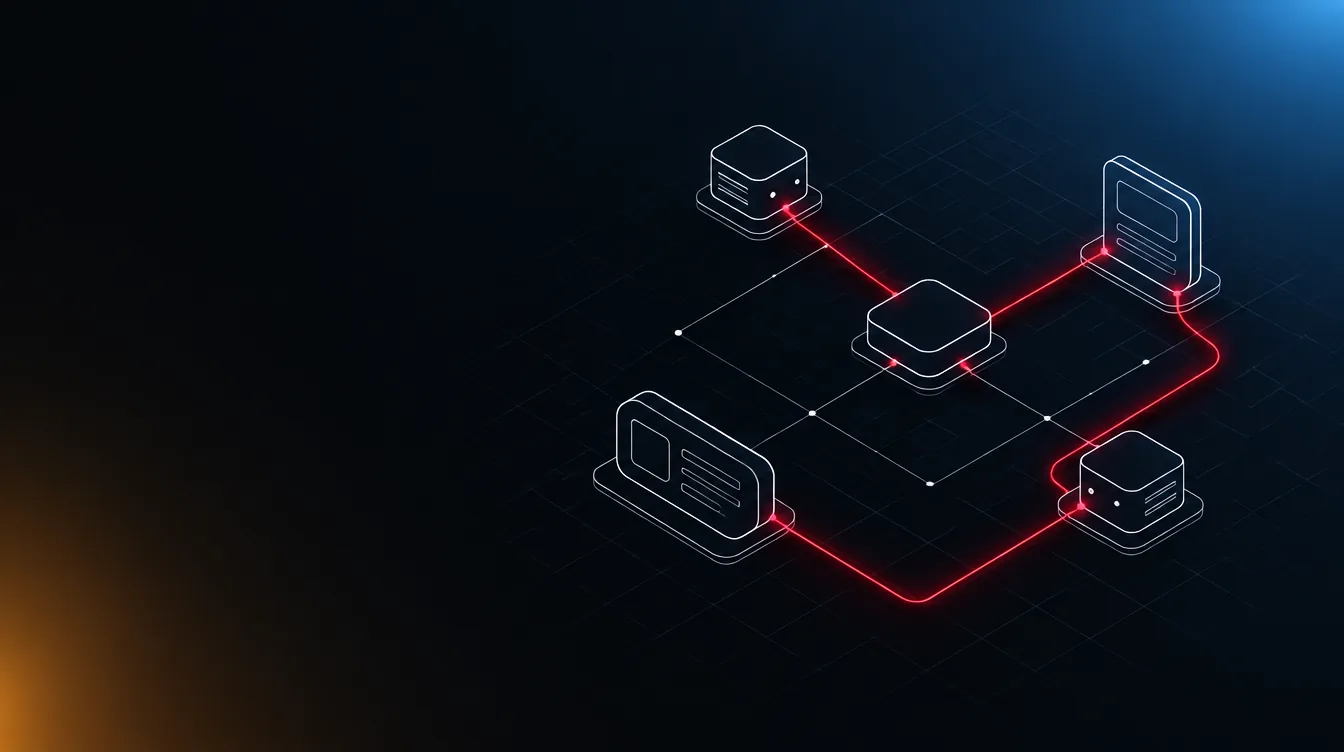
Connecting what is already there is usually enough.
If a system is holding you back, we move you over safely.
Custom build only if standard would cost more.
We run what we sell.
The Structon Suite
Built in-house, in daily use.
Broker software for HANSEKREDIT
Eight loan products, one portal – every enquiry becomes a case.
View case study →Five milestones. No blind flying.
1 · Understand
Map data flows and bottlenecks.
2 · Decide
The binding price is set beforehand.
3 · Build & test
Errors happen in the test run, not in live operation.
4 · Switch with a safety net
Switch date in a quiet period, rollback plan ready.
5 · Operate
Updates, backups, monitoring – by us, on request.
IT systems – what managing directors ask us.
Do you build everything yourself or integrate existing systems?
Our threefold rule: integrate where possible – migrate where necessary – build ourselves where it pays off. With CRM, CMS and bespoke systems we demonstrably build ourselves (Structon Suite, finance broker CRM). An ERP we deliberately do not build from scratch – there we roll out proven systems and connect them.
Do we have to replace our existing programs?
In most cases no. The greatest lever almost always lies in connecting the tools you have instead of buying new ones. Only when a system demonstrably slows the processes do we talk about a change – including safe data migration.
Where is our data held?
That is our standard: EU or German hosting preferred, US tools for customer data only with your explicit consent. We run our own Structon Suite on a server in Frankfurt – we recommend only what we do ourselves.
How long does an IT project take?
That depends on the scope, which is why we name no blanket figure for it. An integration between two systems is often ready in days, a standard CRM in two to six weeks, a migration with grown legacy data takes longer. We settle the date for your project in the first meeting – after that it is in the contract.
What does an IT project cost with you?
IT projects are too individual for price lists – which is why they all start with a free consultation. For orientation we name market benchmarks: a CRM rollout lies on the market roughly between 3,000 and 15,000 euros, a single integration between 2,000 and 7,000 euros, larger undertakings correspondingly above.
Why is the consultation mandatory first?
Because serious IT offers are impossible without a look at your system landscape. In 30 minutes we settle what you have, where it jams and which route pays off – then you get a recommendation, even if it is: start smaller.
How do we know you can do this?
We run our own software: the Structon Suite (CRM, CMS and AI functions, developed by us, on our own server in Frankfurt) and a tailor-made CRM for a Hamburg finance broker with eight product routes. We sell nothing we have not built and run ourselves.
Web design
Websites & shops that win customers – binding price from €549.
Go to section → The next stepAI & automation
Connected systems are the basis – automation is the gain on top.
Go to section →Prices are net and exclude statutory VAT. Our offers are directed exclusively at entrepreneurs within the meaning of Section 14 of the German Civil Code (BGB).
Let’s talk
Free consultation at a fixed appointment – or a non-binding price range first.
Free consultation Request a quoteSo you can ask the questions beforehand.
 Foto: Matheus Bertelli / Pexels
IT systems
CRM für den Mittelstand: Standard einführen oder selbst bauen?
Standard-CRM oder eigene Lösung? Wir rechnen die Kosten über fünf Jahre durch und zeigen, welche Rolle Datenstandort und Ihre Abläufe dabei spielen.
5 Min. · Weiterlesen →
 Foto: Jack Sparrow / Pexels
IT systems
Datenmigration ohne Datenverlust: in vier Stationen ins neue System
Der Systemwechsel steht, die Sorge bleibt: Geht dabei etwas verloren? Vier Stationen, ein Probelauf und ein Rückweg machen die Antwort überprüfbar.
5 Min. · Weiterlesen →
 Foto: panumas nikhomkhai / Pexels
Costs
Website-Wartung: Was der laufende Betrieb wirklich kostet
Nach dem Livegang fängt die Arbeit an einer Website erst an. Welche Posten im laufenden Betrieb anfallen und wie Sie sie verlässlich einplanen können.
5 Min. · Weiterlesen →
Case Study · HANSEKREDIT
First a name, today a head start.
Von der Marke bis zur eigenen Suite mit KI – Branding, Website, Ads und Automatisierung aus einer Hand.
Case Study ansehen →